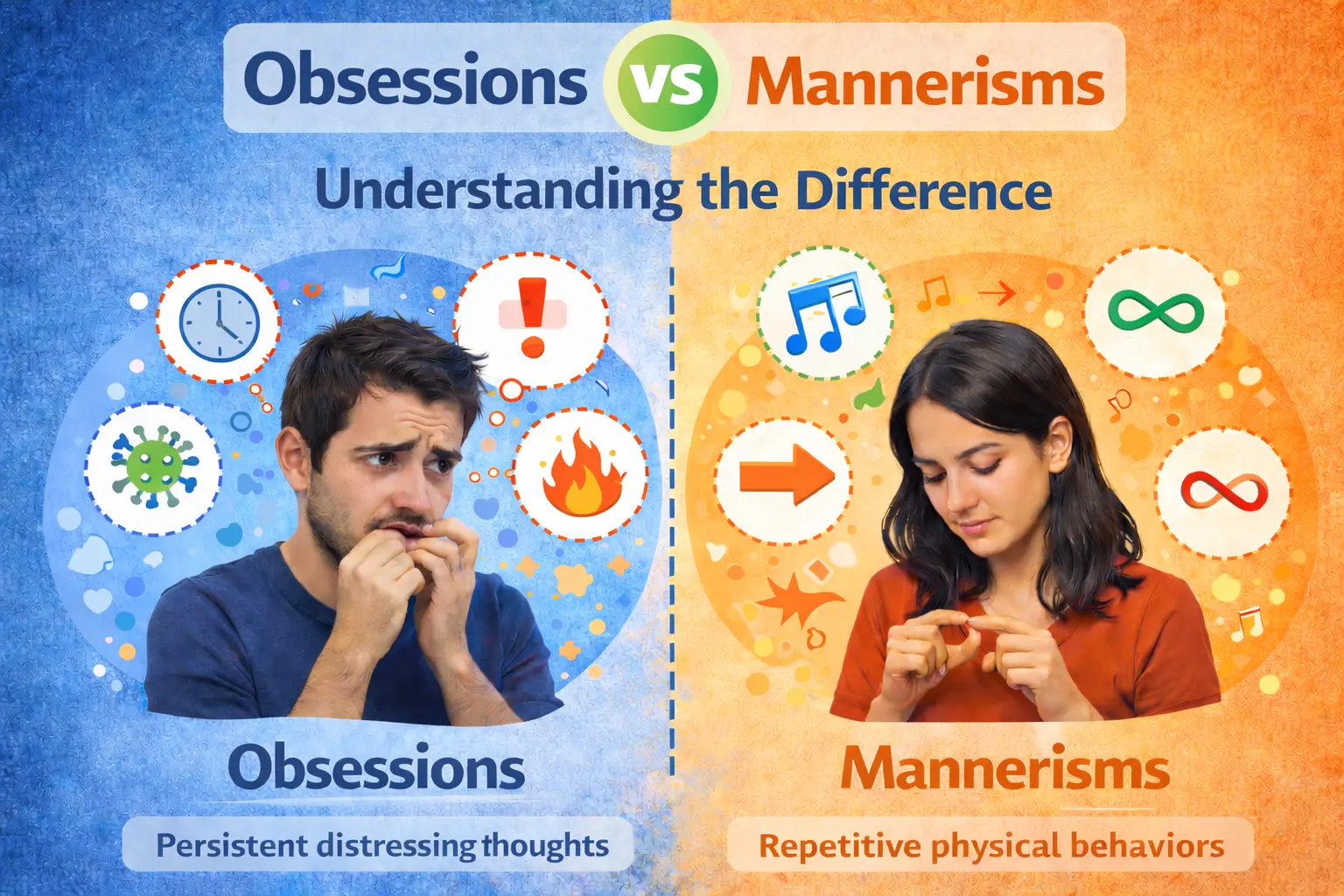
Mannerisms are habitual gestures or behavioral styles. Some people tap their feet, arrange objects symmetrically, or repeat certain phrases. These behaviors may be quirks and are generally harmless unless socially disruptive.
Obsessions, on the other hand, are intrusive, unwanted thoughts, images, or urges that cause distress. In Obsessive-Compulsive Disorder (OCD), these thoughts are persistent and anxiety-provoking. The person recognizes them as irrational but feels unable to control them.
For example, repeated thoughts about contamination may lead to compulsive handwashing, not because the person enjoys it, but because washing temporarily reduces anxiety.
The critical distinction is distress and lack of control. Mannerisms are voluntary habits. Obsessions are intrusive and distressing. When obsessions are followed by repetitive behaviors (compulsions), they significantly interfere with daily life.
OCD is a neuropsychiatric condition involving dysfunction in cortico-striatal-thalamo-cortical circuits. It is highly treatable with cognitive-behavioral therapy (especially Exposure and Response Prevention) and, when needed, medication.
Not every repeated behavior is OCD. But when thoughts feel intrusive and compulsive behaviors feel driven and distressing, professional help can be transformative.