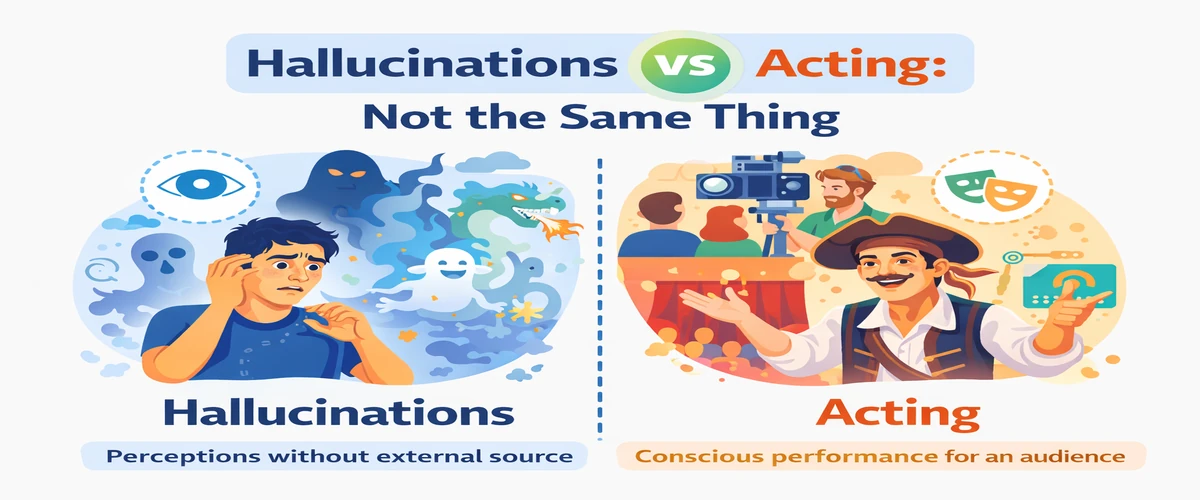
Acting means intentionally pretending. A person who acts knows that the experience is not real. It is voluntary and controlled.
Hallucinations are sensory experiences that occur without an external stimulus. A person may hear voices, see images, or feel sensations that are not present in reality. Crucially, these experiences feel real to them.
Auditory hallucinations - hearing voices when no one is present, are the most common in psychiatric conditions such as schizophrenia or severe mood disorders. Hallucinations can also occur in severe sleep deprivation, substance intoxication or withdrawal, neurological disorders, or high fever.
Brain imaging studies show that hallucinations activate the same sensory areas that are active during real perception. The brain is essentially generating experiences internally but interpreting them as external.
It is important to approach hallucinations with care and professionalism. Dismissing them as “attention-seeking” can delay treatment. At the same time, careful assessment is necessary to differentiate true hallucinations from stress reactions or imaginative experiences.
Hallucinations are involuntary. Acting is voluntary.