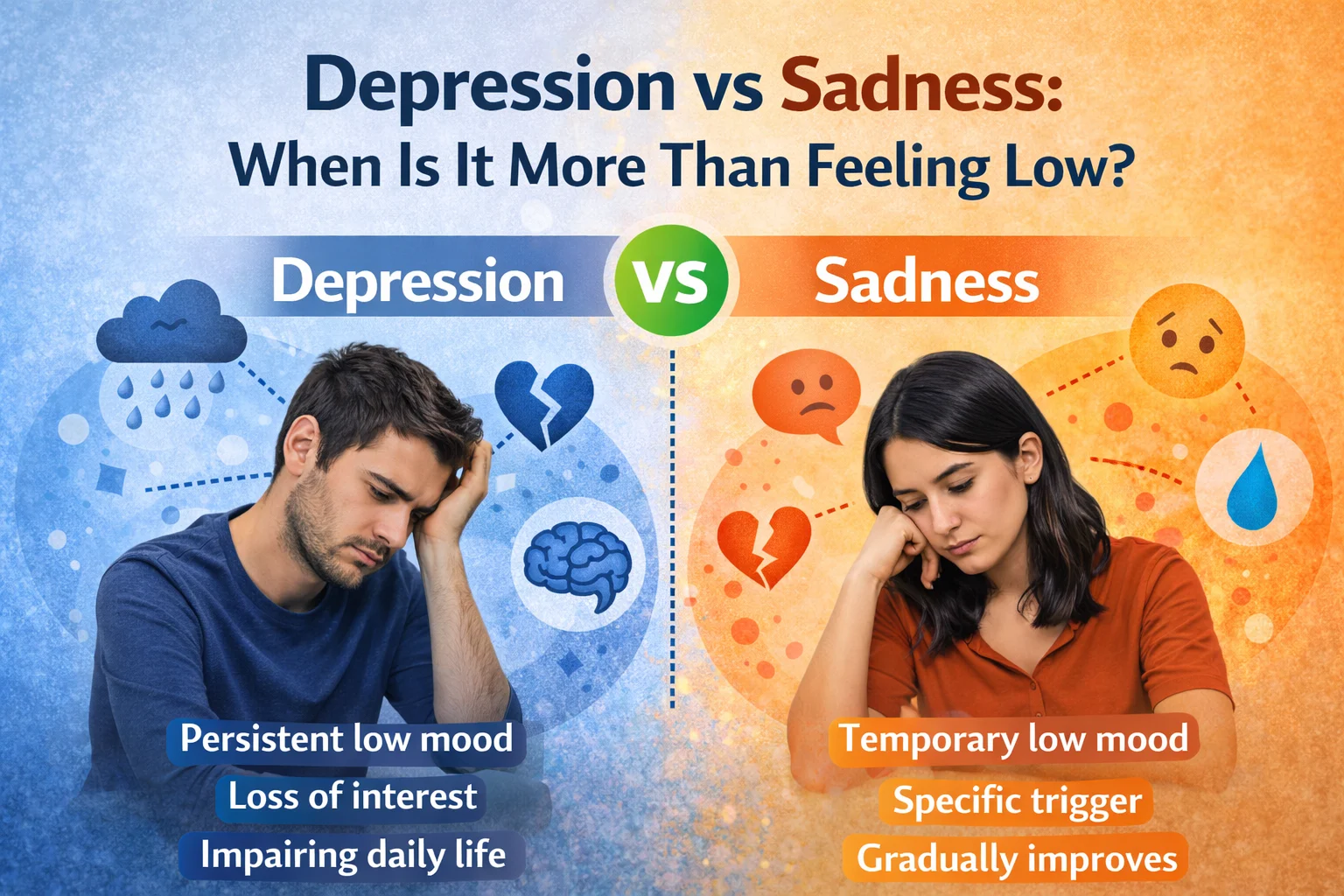
Everyone feels sad at times. Sadness is a natural emotional response to disappointment, loss, rejection, or stress. It is usually temporary and connected to a clear trigger. When circumstances improve, or time passes, the sadness gradually eases. Importantly, even when someone feels sad, they are still able to experience moments of relief, pleasure, or distraction.
Depression, however, is not simply “intense sadness.” It is a medical condition that affects mood, thinking, behavior, sleep, appetite, energy, and self-perception. According to major psychiatric guidelines such as the DSM-5 and WHO classifications, clinical depression involves a persistent low mood or loss of interest and pleasure lasting at least two weeks, often accompanied by fatigue, changes in sleep and appetite, poor concentration, slowed thinking, feelings of worthlessness, or even thoughts of death.
A key difference lies in duration, intensity, and impact on functioning. Sadness fluctuates. Depression lingers. Sadness allows emotional responsiveness. Depression often brings emotional numbness. People with depression frequently describe not just feeling sad, but feeling empty, disconnected, or unable to enjoy things they once loved.
Biologically, depression involves changes in brain circuits regulating mood, stress response, and reward processing. It is not a sign of weakness or lack of resilience. Social stressors may trigger it, but once present, it tends to sustain itself through neurobiological and psychological processes.
If low mood begins to interfere with work, relationships, sleep, appetite, or motivation, or if it persists beyond a couple of weeks, it is important to seek professional evaluation. Treating depression early improves outcomes significantly.
Sadness is human. Depression is a treatable medical condition.