
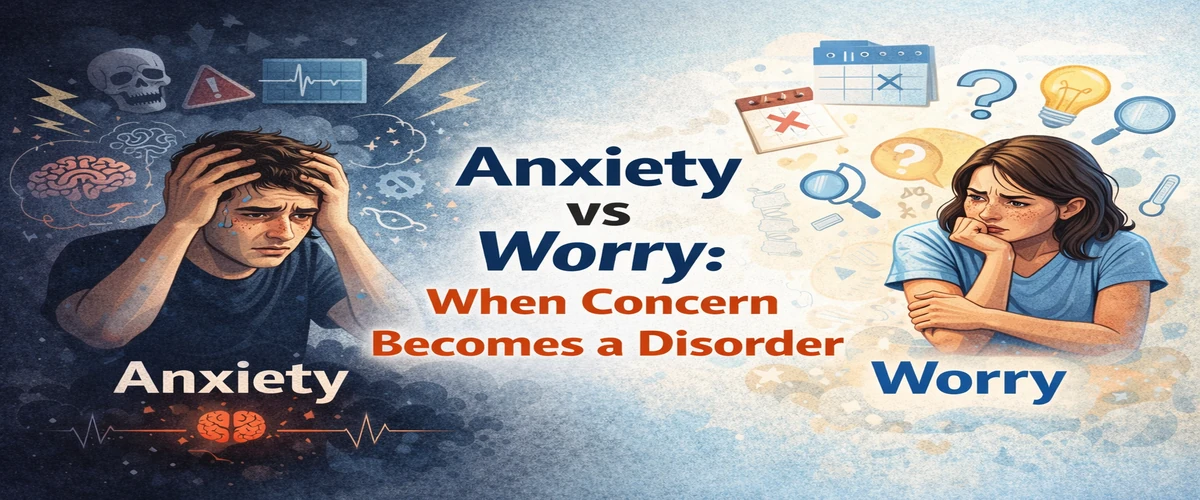
Worry is a normal cognitive process. It helps us anticipate problems and plan solutions. Before an exam, a presentation, or a medical test, some level of worry improves preparation and performance. It is usually specific and temporary.
Anxiety, in clinical terms, is different. It is excessive, persistent, and often disproportionate to the actual situation. In disorders such as Generalized Anxiety Disorder (GAD), individuals experience uncontrollable worry about multiple areas of life for most days over at least six months. The worry feels intrusive and difficult to stop.
More importantly, anxiety is not just a thought process—it is a full-body experience. It includes physical symptoms such as restlessness, muscle tension, palpitations, sweating, sleep disturbance, and difficulty concentrating. The brain’s threat-detection systems become overactive, making the person feel as though danger is constantly imminent, even when there is none.
The key differences are intensity, duration, control, and functional impact. Normal worry is proportionate and resolves. Anxiety disorders are persistent and impair daily life.
If someone finds that their thoughts feel repetitive and uncontrollable, sleep is disturbed, or avoidance behaviors are increasing, a clinical evaluation can help. Anxiety disorders are among the most treatable psychiatric conditions with therapy, lifestyle interventions, and, when appropriate, medication.
Worry prepares you. Anxiety overwhelms you.